Tools · 2026
FlowOS
Project management with one source of truth. Not five tools that disagree.
- Status
- Shipped
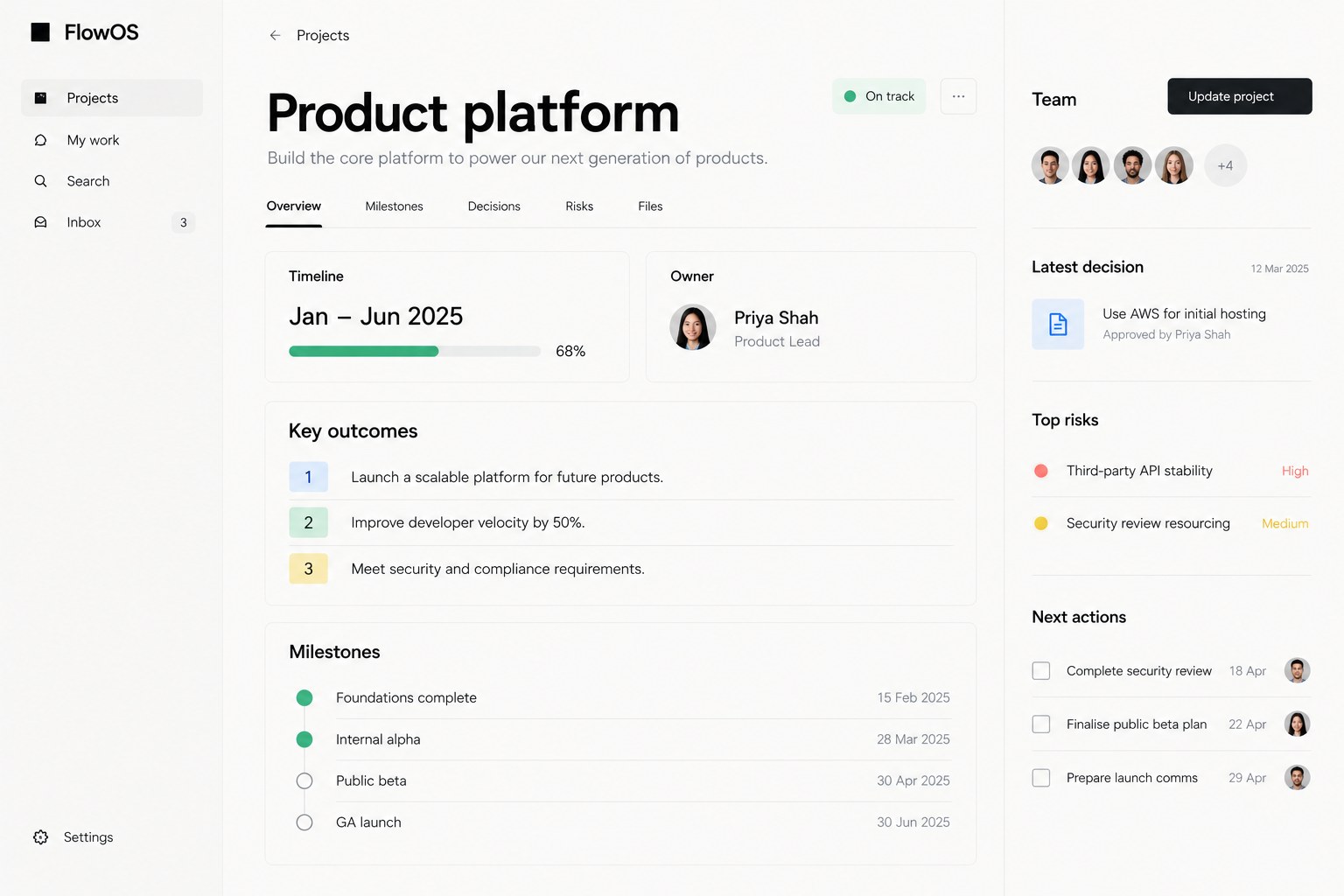
Project information has a habit of living in five places at once. The plan says one thing, the tracker says another, and the decision is buried in chat.
FlowOS is one agreed record per project: outcomes, milestones, owners, decisions, risks and next actions. Other views can exist, but they come from that record instead of competing with it.
“One source of truth” is a service commitment, not a slogan on a dashboard. It only works if someone owns each field, updates have a rhythm, and decisions get written down.
Problem
When the plan, the task tracker and the decision notes disagree, meetings turn into reconciling status instead of deciding what's next.
Research
Planned: map where project data starts, where it gets copied, and which system should stay in charge.
Prototype
Starting simple: a project overview with milestones, owners and decisions, using fictional data to test the hierarchy before any integrations. [Verify: what's built today]
In people’s hands
Next: walk a cross-functional team through a sample project. Can they answer what changed, who owns the next step and what's blocked?
What happened
The risk: a central dashboard becomes one more thing to maintain if updates aren't connected to the work people already do.
What’s next
Test with a real but non-confidential project, then decide which data to integrate, link or deliberately leave alone.
How I’m approaching it
The Double Diamond, as planned. Plans loop back once real people get involved, so this one does too.
- Discover
Surface where project status contradicts itself across tools.
- Define
Define the minimum shared record a project needs.
- Develop
Prototype the overview with fictional data.
- Deliver
Test it against the questions teams actually ask.
- Define
Revisit who owns each piece of data, and how much effort updates take.
- Develop
Explore integrations and permissions.
UX practices
- At-a-glance statusProgress, risks, owners and next actions without scanning five views.
- TraceabilityYou can see when something changed and who's responsible for it.
- Progressive disclosureA focused overview first, detail only when you need it.
Service design
- Operating-model designRoles, update rhythm and ownership are designed alongside the interface.
- Ecosystem mappingWhere project data starts, where it gets duplicated, and which system stays authoritative.